Fungal Problems
Fungal problems are constantly present and need to be recognized early.
This photo shows the first days growth of Pythium. It often starts as a round black spot on the leaf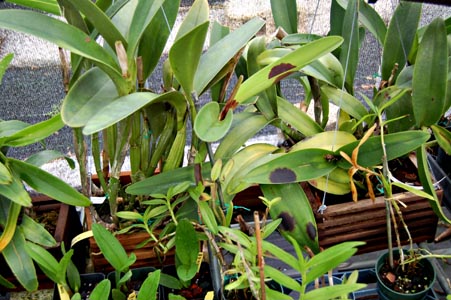
Black rot (Pythium fungus) is the most common problem but often confused with Fusarium fungus. Both are highly contagious and quickly fatal to orchids. The causes are slightly different.
Pythium grows when plants are damp and temperatures drop at night. Cool damp conditions are a breeding ground for Pythium. You should avoid watering plants late in the afternoon when they will not have enough time to dry before sunset. Stagnant air is another contributing factor. Crowded conditions encourage the growth of Pythium. Constantly moving air dries the moisture on the leaves and discourages Pythium. A fan is a cheap and highly effective improvement to your growing conditions.
Pythium is sometimes confused with sunburn (when heat from excess sunlight kills the chlorophyll in the leaves. They can be easily distinguished the next day. Pythium will be soft. moist and grows rapidly.
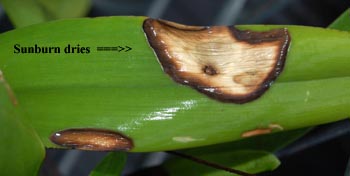
Sunburn will, if removed from the excess light, be dry and not growing. Sunburn will turn brown and will no longer be a treat to the Orchid. Sunburn will not get any better or worst from this point. It is not life threatening.
You should isolate any plant when first seen as fungi is highly contagious. If it dries and becomes safe then the plant can be placed back in your collection. Pythium if left to itself will kill the plant in short order. The best treatment if it is caught early is to cut the infected leaf and discard the infected piece.
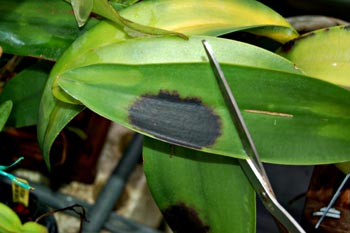
You must cut into good growth to be certain of removing the infection.
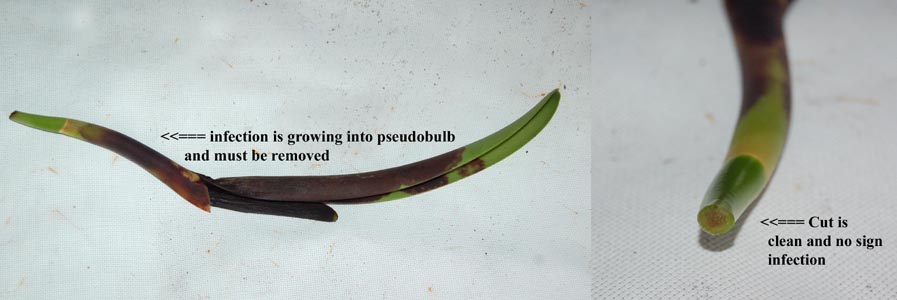
On a leaf this is easy but if the infection is in the pseudobulb inspect carefully.
Examine the cutting and determine that there is no sign of further infection.
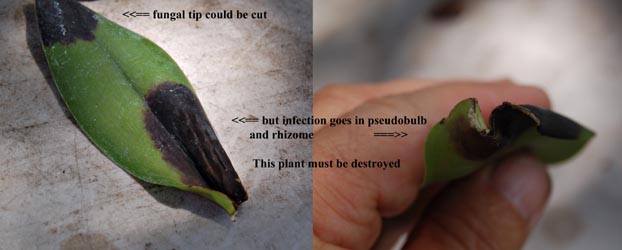
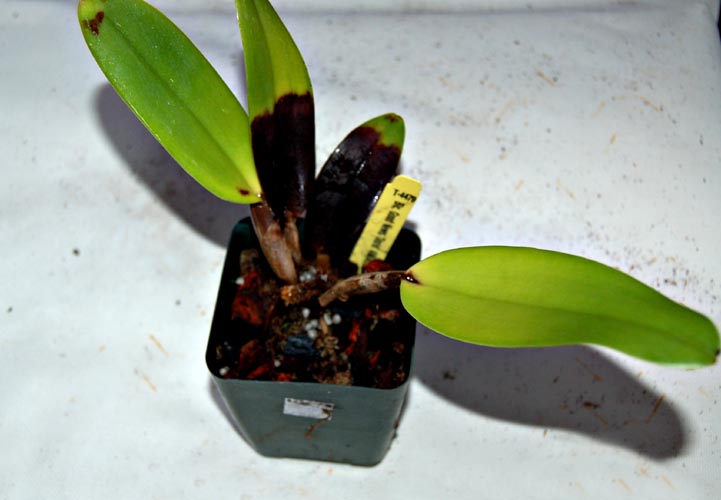
If the infection grows into the pseudobulb and rhizome it is too late to save the orchid. This orchid must be destroyed. It went from healthy to
this in only a day.
Fusarium fungus
Fusarium acts totally different. Fusarium attacks the capillary action of the plant. It clogs the path of water from the roots to the rest of the plant. Even if you had the plant sitting in a pool of water, the plant will die from lack of water. The plant will never receive water it needs to live. 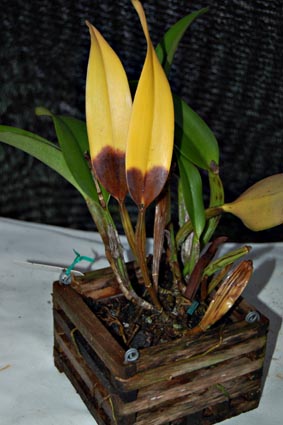 With a little experience you will be able to notice that the infection is growing from the rhizome into the pseudobulb and leaf. The coloration is often more brown than black but can be black as well. The pseudobulbs will be soft to the touch. While the leaves are yellow in this photo,
 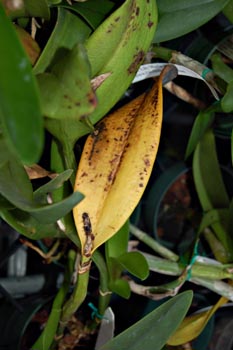 Yellow leaves can also be old leaves dying naturally and not disease like this plant.
There is no cure for fusarium fungus. Commercially we destroy all infected plants. A portion of a plant may be saved if the infection has not traveled to the entire plant. 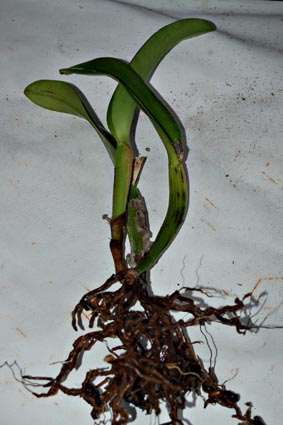 This division looked like it might be possible but an examination of the rhizome displayed the tell tale sign of fusarium --
 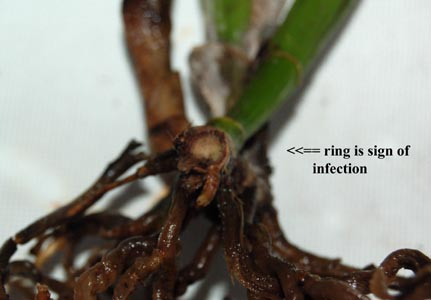 The dark red brown ring around the out side of the rhizome indicates active infection. The entire plant must be destroyed. This plant went from what looked like a healthy plant to this condition in only a couple of days.
If the rhizome was clear like the photo earlier than the division can be saved, but it should still be isolated until you are confident the infection is not still spreading.
Fungal problems will display themselves in the spring and early summer. Fungal spores may hibernate in the winter and not start growing again until the warmer weather. Just because you do not see fungus in the winter does not mean it is not there.
